Sunday, 24 November 2013

Hacking Google Gmail accounts exploiting password reset system flaw

Security researcher Oren Hafif demonstrated how to hack a Google Gmail account exploiting a serious flaw in the password reset process.

A serious vulnerability in the password reset process of Google account allows an attacker to hijack any account, this is the sensational discovery made by security researchers Oren Hafif.
that password recovery is often in the center of attention for attackers – and for security professionals.” reported Oren.
Oren demonstrated the feasibility of a common spear-phishing attack relying on a number of flaws including Cross-site request forgery (CSRF) and cross-site scripting (XSS). An attacker sends to the targeted account a fake “Confirm account ownership” email, claiming to come from Google.
Following the canonic scheme of attack the link embedded in the fake e-mail asks the recipient to confirm for the ownership of the account and requests victim to change the password.
The link in the email points to an HTTPS google.com URL, but exploiting a CSRF attack with a customized email address it leads the victim to a website controlled by attackers.
” The link should actually refer to an attacker’s site (and it does):
http://www.orenh.com/test.html#Email=hatechnion@gmail.com” The attacker’s site performs a CSRF with the customized email address, and once completed – launches the XSS exploit. The code might look like this:” said Oren.
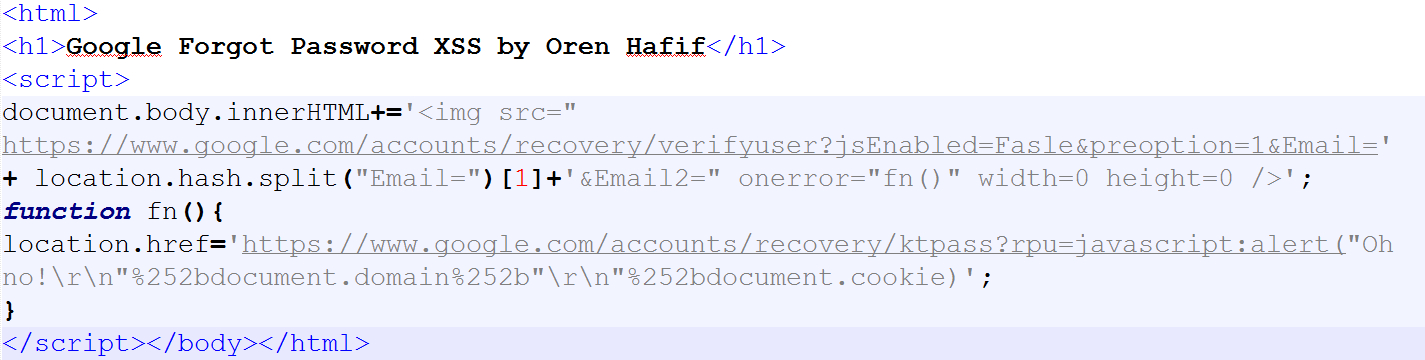
Google mail attack code
the code above, reads a Hash parameter (“Email”) for the victim’s email. It creates an invisible image and puts an “initialize password recovery” link as its source.After the request is processed, an Error event is thrown (since this is not really an image).”
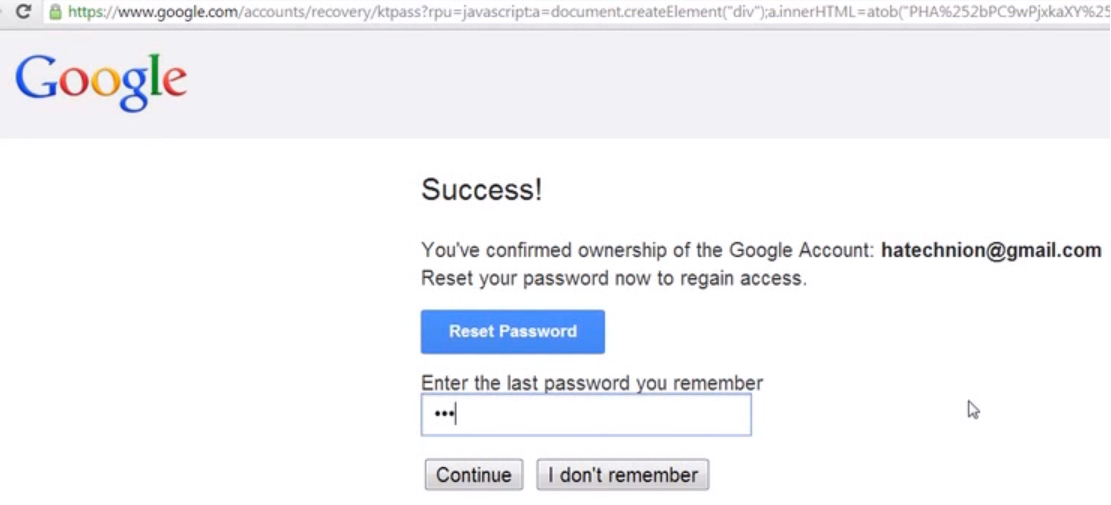
The Google HTTPS page will ask the victim to confirm the ownership by entering his last password and then will ask to reset his password.
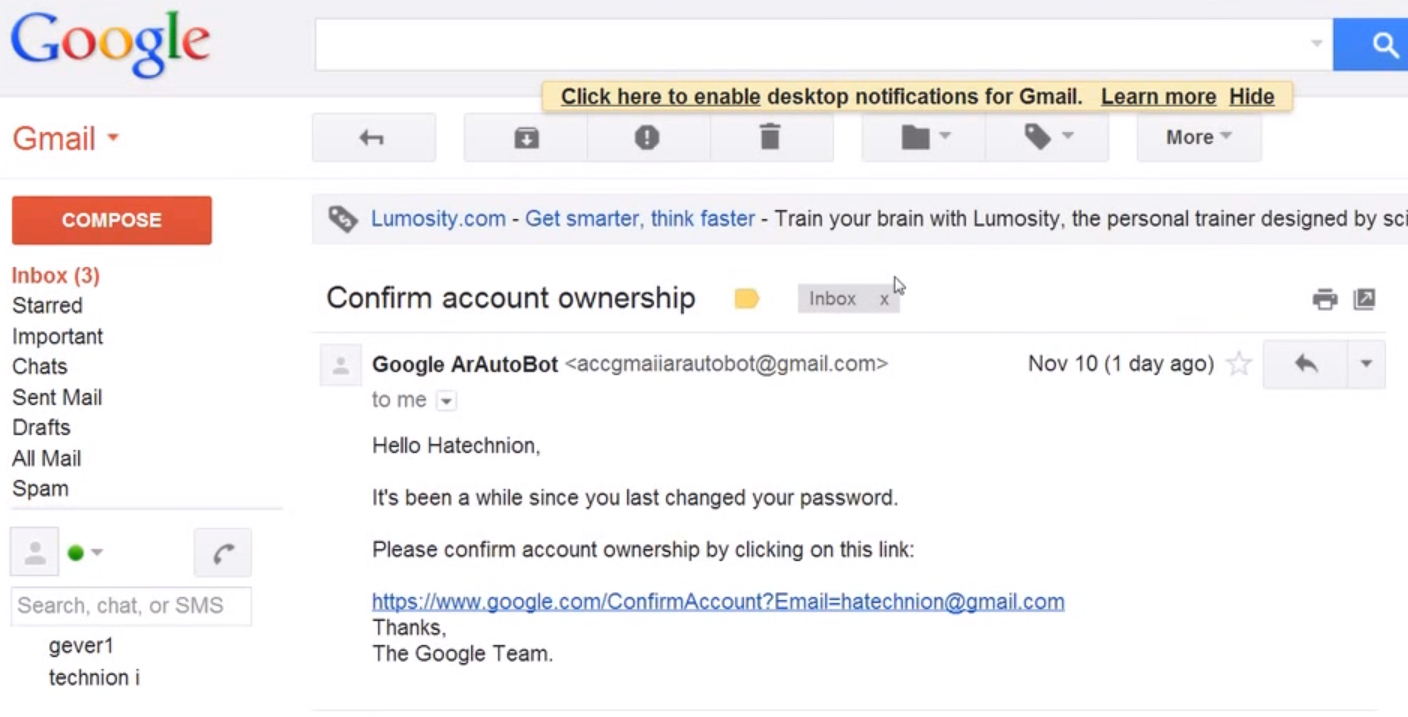
Hacking Google Gmail account
Hacking Google Gmail account 2
Hacking Gmail account email link
At this point the hacker has grabbed victim new password and cookie information with an XSS attack.
“The onError handler now redirects to the XSS’d URL, The user clicks “Reset Password”… and from here the sky is the limit.”
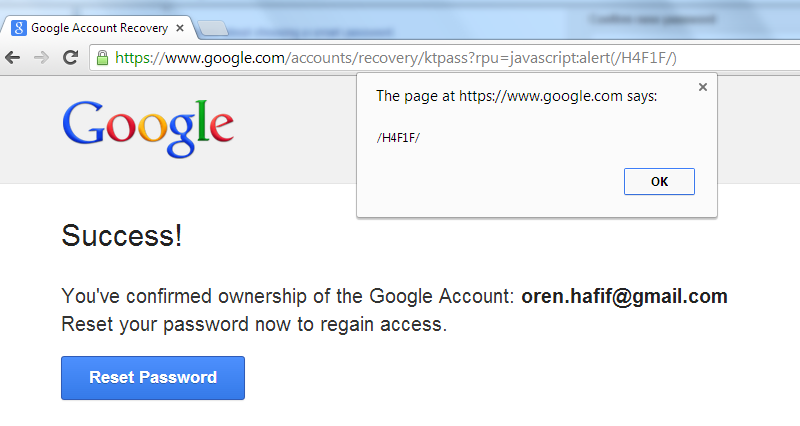
Google Gmail xss attack
The researcher published a proof of concept video to demonstrate the attack:
http://www.youtube.com/watch?feature=player_embedded&v=zJFuSPywWM8
Hafif reported the flaw to the Google Security department and Google has promptly fixed the issues assigning a reward of $5,100 under their Bug Bounty Program.
Facebook vulnerability allows to view hidden Facebook Friend List

Researcher Irene Abezgauz  from the Quotium Seeker Research Center discovered a Facebook flaw that allows anyone to see a profile’s private friend list.

Facebook is the privileged target for hackers and cybercriminals, the popular social network is a mine of data that could be used to acquire information on a specific target or to conduct criminal activities involving a large audience (e.g. Serve a malware, conduct a phishing campaign, arrange cyber fraud).Through the analysis of mutual relationship between users an attacker could elaborate the proper strategy to hit a victim, or a group of individuals. There are numerous tools that could be exploited to automatize the reconnaissance process through , and numerous are the functionality that could be used for useful researched.Recently I’ve published a post to describe the work of experts Werrett and Lee that demonstrated how to conduct a powerful analysis using FBStalker, a tool created to find a comprehensive amount of data on any Facebook user.
FBStalker reverse-engineers the Facebook Graph to find information on every user, the tool does not require a direct friendship with targeted profiles, it just needs to access to parts of victim’s posts marked as public.Through the use of Graph Search data mining activities has become very easy, Graph Search mines Facebook’s vast user data returning personalized results from natural-language queries. Using it is possible to discover what individuals like, where people have visited and if they share those same preferences with their friends.”
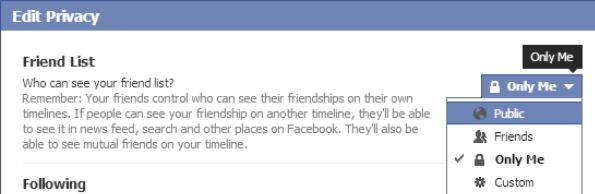
The study of friend list is another powerful practice to profile a target, but it is known that through privacy setting Facebook users can make the friend list public or private, if friend list is made private it will be not visible on publicly viewable profile.
The security researcher Irene Abezgauz  from the Quotium Seeker Research Center has discovered a Facebook flaw that allows anyone to see a users’ friend list, even when it is made private.
Facebook friend list

The researcher demonstrated how to access to the friend list abusing the Facebook feature “People You May Know” implemented by the social networks to suggests new friends to its users.
The feature analyzes Facebook mutual connections, related level, and many other criteria to suggests friends.
The first step is the creation of a fake Facebook profile used to send a friend request to the target account.
Even if the targeted user never accepted the request, the attacker could see that person’s friend list via the “People You May Know” feature. Clicking on the ‘see all’ button the attacker can expand the list to view hundreds of suggestions of users who are friends with the victim.
“As part of the research for this vulnerability we wanted to verify the exact conditions under which this was possible. The friends chosen for the victim were users who also had their friends list set to private. In addition, no interactions took place between the users except for the sending of friend requests. This is data which is not publicly available to any user who is not a friend of the victim.” states the post.
FB replied that:
”If you don’t have friends on Facebook and send a friend request to someone who’s chosen to hide their complete friend list from their timeline, you may see some friend suggestions that are also friends of theirs. But you have no way of knowing if the suggestions you see represent someone’s complete friend list.”
This Facebook hasn’t recognized Irene Abezgauz’s discovery, but maybe it’s better to evaluate it again in fact most of the friend list members is available to the attacker and even if it represents a partial friend list is a violation of user-chosen privacy controls.