Federal authorities have arrested two young brothers in Fresno,
Calif. and charged the pair with masterminding a series of cyberheists
that siphoned millions of dollars from personal and commercial bank
accounts at U.S. banks and brokerages.
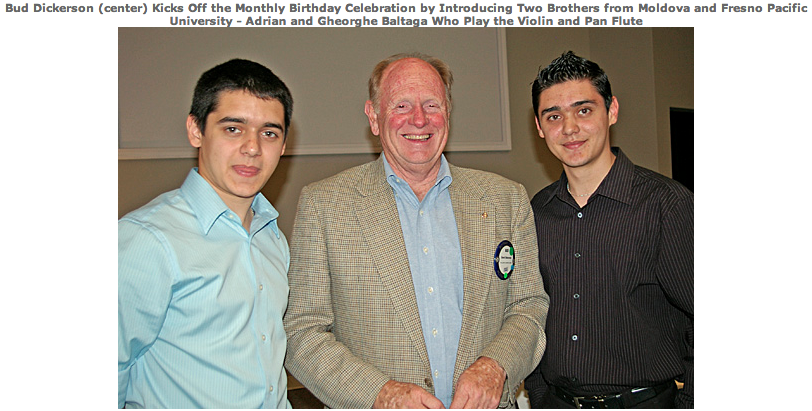
Taken into custody on Oct. 29 were Adrian and Gheorghe Baltaga,
25 and 26-year-old men from Moldova. Documents unsealed by the U.S.
District Court for the Northern District of California laid out a
conspiracy in which the brothers allegedly stole login credentials for
brokerage accounts of Fidelity Investments customers,
and then set up fraudulent automated clearing house (ACH) links between
victim accounts and prepaid debit card accounts they controlled.
From there, according to the government, the men then used the debit cards to purchase money orders from MoneyGram and the U.S. Postal Service,
which were deposited into different accounts that they could pull cash
from using ATM cards. An attorney for the Baltaga brothers did not
respond to multiple requests for comment.
According to interviews with investigators, the Baltaga indictments (PDF)
reveal surprisingly little about the extent of the cybercrimes that
investigators believe these men committed. For example, sources familiar
with the investigation say the Baltaga brothers were involved in a 2012
cyberheist against a Maryland title company that was robbed of $1.7
million.
In April 2012, I was tracking a money mule
recruitment gang that had hired dozens of people through bogus
work-at-home jobs that were set up to help cybercrooks launder funds
stolen from hacked small businesses and retail bank accounts. One of the
mules I contacted said she’d just received notification that she was to
expect a nearly $10,000 transfer to her bank account, and that she
should pull the money out in cash and wire the funds (minus her 8
percent commission) to three different individuals in Ukraine and
Russia.
The mule said she’d been hired by a software company in Australia,
and that her job was to help the firm process payments from the
company’s international clients. This mule told me the name of her
employer’s “client” that had sent the transfer, and a Google search
turned up a Washington, D.C.-area title firm which asked not to be named
in this story out of concern that company’s competitors would use it
against them.
That title firm was unaware of it at the time, but fraudsters had
recently installed the ZeuS Trojan on an employee’s computer and were
using it to send wire transfers and ACH payments to money mules and to
bank accounts controlled by the bad guys. In many cases, victim
companies will react with hostility when alerted to such crimes by a
reporter, but in this case the company quickly contacted their bank and
discovered that the thieves had already pushed through more than
$700,000 in fraudulent wires and ACH payments. Just minutes before I
contacted the title firm, the crooks had initiated a fraudulent wire
transfer of $1 million.
The company and its bank were ultimately able to block the $1 million
wire and claw back about half of the $700,000 in wires and fraudulent
ACH transfers. The firm and its bank seemed doomed to battle it out in
court over the remaining amount, but earlier this year the two sides
reached a confidential settlement.
The Baltaga brothers were charged with wire fraud, conspiracy to
commit bank fraud and wire fraud, aggravated identity theft, and aiding
and abetting. If convicted, the two men also stand to lose the
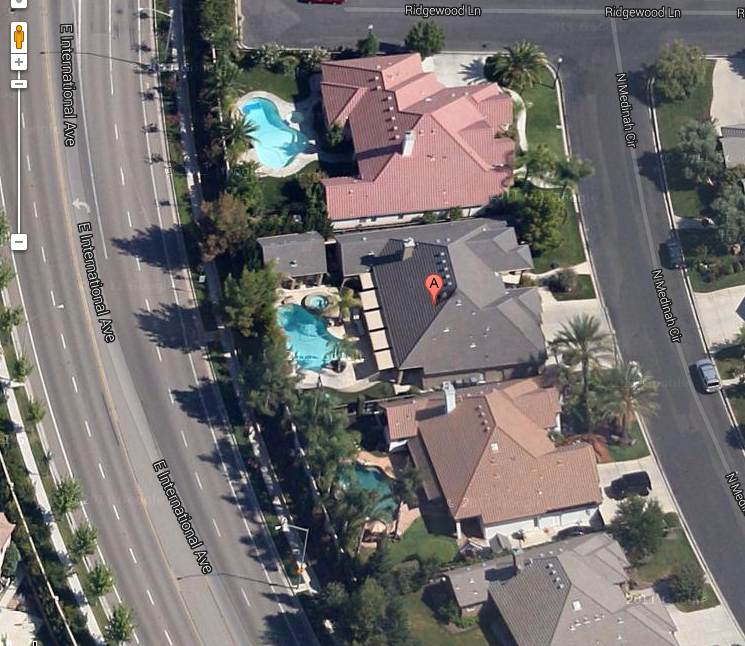
5-bedroom, $800,000 home they purchased together in Fresno.
If you operate a small business in the United States and are banking online, please take a moment to read this piece: Online Banking Best Practices for Businesses.
Businesses do not enjoy the same legal protections afforded to consumer
banking customers hit by cyber thieves. As a result, organizations can
be held responsible for any losses due to phishing or account takeovers.
Information Security, Ethical Hacking, website Security, Database Security, IT Audit and Compliance, Security news, Programming, Linux and Security.
Wednesday, 20 November 2013
Cupid Media Hack Exposed 42M Passwords
An intrusion at online dating service Cupid Media
earlier this year exposed more than 42 million consumer records,
including names, email addresses, unencrypted passwords and birthdays,
according to information obtained by KrebsOnSecurity.
The data stolen from Southport, Australia-based niche dating service Cupid Media was found on the same server where hackers had amassed tens of millions of records stolen from Adobe, PR Newswire and the National White Collar Crime Center (NW3C), among others.
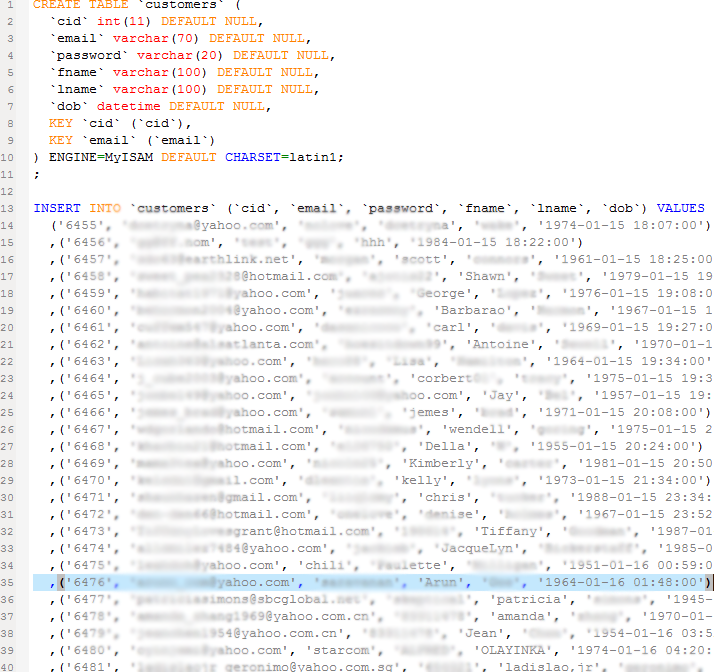
The purloined database contains more than 42 million entries in the format shown in the redacted image below. I reached out to Cupid Media on Nov. 8. Six days later, I heard back from Andrew Bolton, the company’s managing director. Bolton said the information appears to be related to a breach that occurred in January 2013.
“In January we detected suspicious activity on our network and based upon the information that we had available at the time, we took what we believed to be appropriate actions to notify affected customers and reset passwords for a particular group of user accounts,” Bolton said. “We are currently in the process of double-checking that all affected accounts have had their passwords reset and have received an email notification.”
I couldn’t find any public record — in the media or elsewhere — about
this January 2013 breach. When I told Bolton that all of the Cupid
Media users I’d reached confirmed their plain text passwords as
listed in the purloined directory, he suggested I might have “illegally
accessed” some of the company’s member accounts. He also noted that “a
large portion of the records located in the affected table related to
old, inactive or deleted accounts.”
“The number of active members affected by this event is considerably less than the 42 million that you have previously quoted,” Bolton said.
The company’s Web site and Twitter feed state that Cupid Media has more than 30 million customers around the globe. Unfortunately, many companies have a habit of storing data on customers who are no longer active.
Alex Holden, chief information security officer at Hold Security LLC, said Bolton’s statement is reminiscent of the stance that software giant Adobe Systems Inc. took in the wake of its recently-disclosed breach. In that case, a database containing the email and password information on more than 150 million people was stolen and leaked online, but Adobe says it has so far only found it necessary to alert the 38 million active users in the leaked database.
“Adobe said they have 38 million users and they lost information on 150 million,” Holden said. “It comes to down to the definition of users versus individuals who entrusted their data to a service.”
The danger with such a large breach is that far too many people reuse
the same passwords at multiple sites, meaning a compromise like this
can give thieves instant access to tens of thousands of email inboxes
and other sensitive sites tied to a user’s email address. Indeed, Facebook has been mining the leaked Adobe data
for information about any of its own users who might have reused their
Adobe password and inadvertently exposed their Facebook accounts to
hijacking as a result of the breach.
Holden added that this database would be a gold mine for spammers, noting that Cupid’s customers are probably more primed than most to be responsive to the types of products typically advertised in spam (think male enhancement pills, dating services and diet pills).
Bolton adopted a softer tone in the second half of his email, indicating that the company may not have understood the full scope of the intrusion.
“Since you have now provided additional information we now have a clearer picture of what transpired back in January,” Bolton wrote. “We are currently in the process of double-checking that all affected accounts have had their passwords reset and have received an email notification.”
Bolton continued:
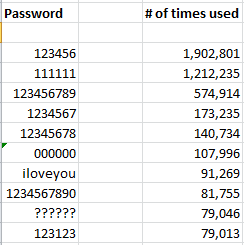
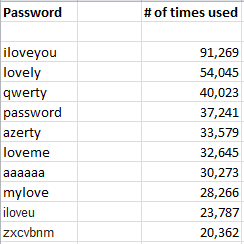
In any case, since I didn’t have to crack any of the passwords, I thought it might be useful to have a look at the top passwords used by Cupid Media customers. It seems that many Cupid users did not place much value in their accounts when picking passwords, because a huge percentage of them chose downright awful passwords. By my count, more than 10 percent of Cupid’s users chose one of these 10 passwords:

The top 10 non-numeric passwords are probably typical for a dating site, but still horrible nonetheless:
The data stolen from Southport, Australia-based niche dating service Cupid Media was found on the same server where hackers had amassed tens of millions of records stolen from Adobe, PR Newswire and the National White Collar Crime Center (NW3C), among others.
The purloined database contains more than 42 million entries in the format shown in the redacted image below. I reached out to Cupid Media on Nov. 8. Six days later, I heard back from Andrew Bolton, the company’s managing director. Bolton said the information appears to be related to a breach that occurred in January 2013.
“In January we detected suspicious activity on our network and based upon the information that we had available at the time, we took what we believed to be appropriate actions to notify affected customers and reset passwords for a particular group of user accounts,” Bolton said. “We are currently in the process of double-checking that all affected accounts have had their passwords reset and have received an email notification.”
A redacted screen shot showing several of the stolen user accounts. Passwords were stored in plain text.
“The number of active members affected by this event is considerably less than the 42 million that you have previously quoted,” Bolton said.
The company’s Web site and Twitter feed state that Cupid Media has more than 30 million customers around the globe. Unfortunately, many companies have a habit of storing data on customers who are no longer active.
Alex Holden, chief information security officer at Hold Security LLC, said Bolton’s statement is reminiscent of the stance that software giant Adobe Systems Inc. took in the wake of its recently-disclosed breach. In that case, a database containing the email and password information on more than 150 million people was stolen and leaked online, but Adobe says it has so far only found it necessary to alert the 38 million active users in the leaked database.
“Adobe said they have 38 million users and they lost information on 150 million,” Holden said. “It comes to down to the definition of users versus individuals who entrusted their data to a service.”
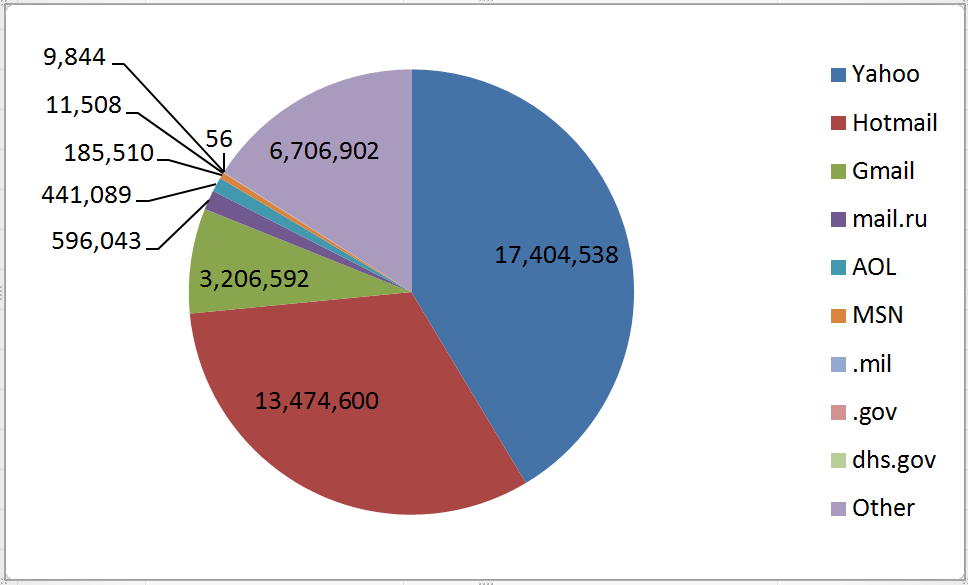
31
million Cupid users registered with a Yahoo, Hotmail or Gmail address.
56 Homeland Security Dept. employees were looking for love here as well.
Holden added that this database would be a gold mine for spammers, noting that Cupid’s customers are probably more primed than most to be responsive to the types of products typically advertised in spam (think male enhancement pills, dating services and diet pills).
Bolton adopted a softer tone in the second half of his email, indicating that the company may not have understood the full scope of the intrusion.
“Since you have now provided additional information we now have a clearer picture of what transpired back in January,” Bolton wrote. “We are currently in the process of double-checking that all affected accounts have had their passwords reset and have received an email notification.”
Bolton continued:
Subsequently to the events of January we hired external consultants and implemented a range of security improvements which include hashing and salting of our passwords. We have also implemented the need for consumers to use stronger passwords and made various other improvements.It is entirely likely that the records I have seen are from the January breach, and that the company no longer stores its users’ information and passwords in plain text. At least Cupid Media doesn’t send your password in plain text when you request a password reset, like far too many other companies do. It’s also remarkable that a company with this many users would not have seen this coming. Back in Feb. 2011, I broke a story that received considerable media attention; it was about a hack that exposed some 30 million customer records at Plenty Of Fish (pof.com), an online dating service that also admitted to storing its users’ passwords in plaintext.
We would like to thank you for bringing this issue to our attention and I can confirm that we are committed to investigate this matter further and make any additional improvements still required. Protecting our customer’s privacy and data is important to us and we will continue to make additional investments in improved security for our members. We sincerely apologize for the inconvenience this has caused our members.
In any case, since I didn’t have to crack any of the passwords, I thought it might be useful to have a look at the top passwords used by Cupid Media customers. It seems that many Cupid users did not place much value in their accounts when picking passwords, because a huge percentage of them chose downright awful passwords. By my count, more than 10 percent of Cupid’s users chose one of these 10 passwords:
The top 10 non-numeric passwords are probably typical for a dating site, but still horrible nonetheless:
Subscribe to:
Posts (Atom)